Thursday, 29 June 2023

Epitome of intelligence - Lord Hanuman

As per Hindu mythology,  Lord Hanuman is the most popular, loved and worshipped god. He is the epitome of mental and physical strength. 

बल, बुद्धि, विद्या देहु मोहि, हरहु कलेश विकार

In the Hanuman Chalisa, we seek strength, wisdom and knowledge from lord Hanuman. 
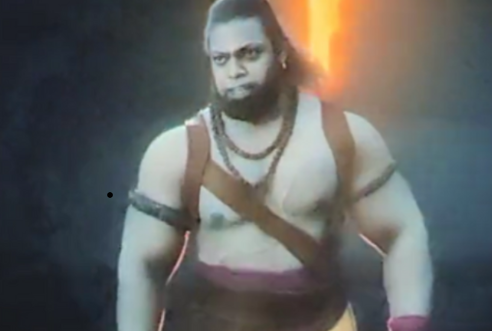


The revered devotee of lord Rama who played a pivotal role in finding Sita. The journey of finding Sita, who was abducted by Ravana was never easy. It was a test of both mental and physical strength. Lord Hanuman embraced the challenge and found Sita.

Today we reflect on certain critical incidents which happened during the flight across the ocean to Lanka. As Lord Hanuman took off from Indian coastline towards Lanka, he recited the name of Lord Rama. 

a. Mission comes first  - 

Filled with hope and determination, Lord Hanuman was speeding up towards Lanka. He found an old mountain figure emerging from the ocean which was Mainak. Mainak was Dasharatha's (Lord Ram's father) friend. He wanted to help Hanuman and offered him to rest. Lord Hanuman was stuck in a dilemma. On one side denying a pure soul i.e. Mainak did not seem correct while on the other side resting would delay the mission of finding Sita. 

Lord Hanuman found an interesting way to solve the situation. He lowered his aerial trajectory and touched the Mainak mountains and catapulted with a higher speed towards Lanka. In this way he did not hurt the emotion of Mainak and saved time as well. He understood the feeling of service of Mainak but gave more importance to the mission. But the way with which lord Hanuman kept the balance is extraordinary The below verse of Hanuman Chalisa rightly depicts the intelligence of Lord Hanuman. 

विद्यावान गुणी अति चातुर, राम काज करिबे को आतुर 

You are Learned, Virtuous and Extremely Intelligent, You are always Eager to do the Works of Sri Rama.

b. Be aware of which battles to fight and which to skip

Moving ahead, Lord Hanuman found demoness Sursa in the ocean. Sursa was so huge that she blocked the way of Lord Hanuman. She was sent by gods to check Hanuman's strength and intelligence. As these were the secret ingredients of success of the mission. Sursa wanted to eat Lord Hanuman and she challenged him. Lord Hanuman was least interested to fight this battle, as time was precious for him. Lord Hanuman started to enlarge himself. Looking into this Sursa also started to enlarge her mouth to eat Hanuman. Immediately Lord Hanuman reduced to size and went inside Sursa's mouth and came outside. As Sursa had said earlier no one can come out from my mouth alive, Lord Hanuman proved it wrong. Sursa was pretty happy with the intelligence of Lord Hanuman.

This incident teaches another valuable lesson of time management. Time is a limited asset. And we should be aware of what is more important for us. Basis that we should fight or take only those tasks which are really important for our goals. 

The life of Lord Hanuman is filled with many such incidents of wisdom and strength. Will talk about some more interesting incidents in the next post. Till the stay tuned.

Friday, 23 June 2023

I am Ravana and I am not a blacksmith

Amid the recent backlash against the movie "Adipurush" , a lot of questions have been raised regarding the dialogues, cast and plot of the movie. Internet is flooded with memes making fun of all the characters of the movie. From hairstyle of Ravana to moustache of Lord Rama in the movie, every single aspect has been under the radar of film critics, influencers, celebs and even the Aam Aadmi. People are even filing legal complains against the movie across India.

In this series, want to talk about the revered characters of the Ramayana.  Will start of with the most famous villains of all times based on Hindu mythology i.e. Ravana. 


Though the movie Adipurush has shown Ravana as a blacksmith forging iron in his black Lanka. He is a trained bat feeder who sleeps with snakes. I don't know if any of this is correct or not. Attempt is not to question or disrespect someone but to put some light on the characters.

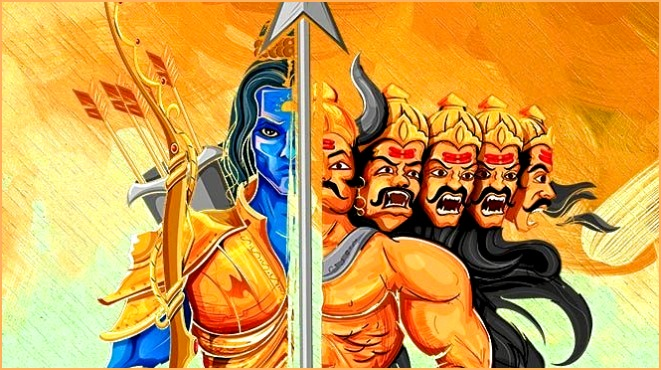
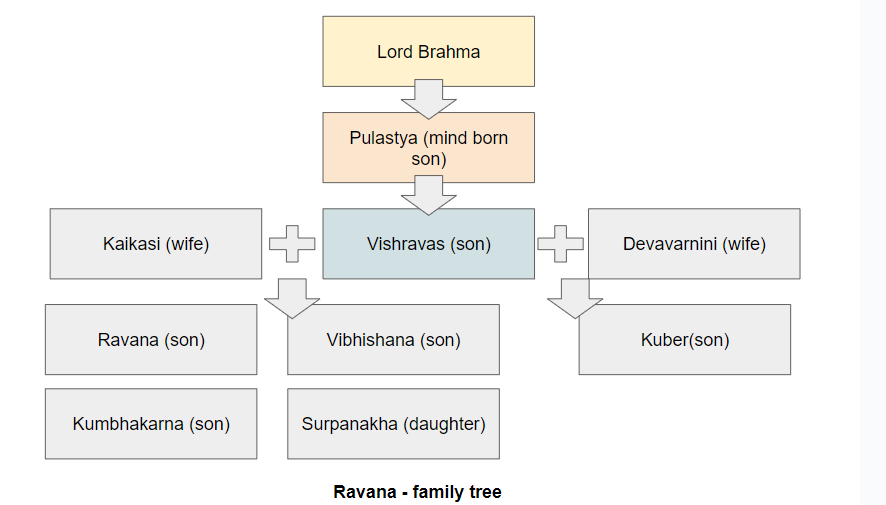
Ravana's lineage can be traced back to Lord Brahma who was his great grand father. He was the son of sage Vishravas and demon mother Kaikasi, which made him half demon (asura) and half brahmin. But Ravana was different from all the demons. On many fronts he was even better or at par with lord Rama.


In some parts of Sri Lanka, he is even worshipped as god. Even lord Rama knew that Ravana was more revered and capable than him, but it was his arrogance which led to his demise 

Following 4 traits not only make Ravana one of the most flamboyant villains but also a great person. 

1. Inordinate scholar - Ravana was a learned scholar who was expert of the Vedas and Puranas. He was one of most learned scholars of those times. He was author of  many books i.e. Ravana Samhita (book on astrology), Arka Prakasham (book on medicine). He was adept at Ayurveda techniques as well. 

2. Music maestro - Ravana was a great musician. In order to please Lord Shiva, he even composed the " Shiva Tandav Shrotam", which is considered to be one of the best compositions on Lord Shiva

3. Greatest devotee of Lord Shiva - Ravana had 10 heads, that's why he is also known as Dasanana (man with 10 heads). In order to please lord Shiva he even cut his heads. Later lord Shiva restored all his heads and gave him boon. As per certain scriptures, he made a Rudra Veena with one of his heads and played music to please Lord Shiva.

4. Knowledgeable than Lord Rama -  Lord Rama always knew and respected the knowledge and traits of Ravana. It was only his arrogance which led to his demise. When Lord Rama killed Ravana, he immediately asked Lakshmana to go to Ravana and get some knowledge. Lakshmana was hesitant to take knowledge from a demon, but followed his brother's command. When he went to Ravana and asked for his wisdom, Ravana summarized the all the learnings of his life in 2 words - Shubhasya Sighram i.e. Do good/right things as soon as possible. He even mentioned that he was aware that he had done wrong by abducting Sita but was not able to do the right thing due to his ego and arrogance. These last words from Ravana are one of the key tenets most of the organizations have in their culture books today. 

Hope we are able to see Ravana with a better lens after reading this. Thanks for reading. Will be talking about more mythlores in the next version. Till then stay tuned.


(Note - Views are personal and not intended to effect harm any sentiments)


Wednesday, 31 August 2022

Ganesha Vs Kartikeya — The game of Mindset


Lord Shiva and Parvati are blessed with two sons i.e. Kartikeya, Ganesha, and one daughter i.e. Ashokhasundari. Both the sons are the epitome of supreme power and knowledge. Still, we worship Ganesha as the first deity in Hindu Mythology.


Kartikeya, one of the most handsome gods of Hindu Mythology, the God of War, the god with 6 faces, the god who drives peacock, is one of the most powerful gods. On the other hand Ganesha, the younger brother has an elephant head, drives a rat, and loves eating modakas. Then why Ganesha, the first deity? Let’s try to understand it with folklore.

Once upon a time, Asura king Mahabali decided to conduct a Maha Yagya with all deities and devotees of the whole universe. A conflict arose during the Yagya on whom to worship first. The discord reached to Lord Shiva for a solution. Lord Shiva pronounced a competition of all Gods to decide the first deity. The god who completes three rounds of the world first will be the winner and the first deity. Kartikeya with his peacock, Indra with his Airavat, Vayu deva with his Gazella accelerated to cover the race. On the other hand, Ganesha with his rat, was no match to the speed of other gods’ vehicles. Ganesha calmly thought through the situation and decided to complete three rounds of his parents Shiva and Paravati. Parents are any child’s only world, so three rounds around them complete the task. In this way, Ganesha completed the task beforehand all other Gods and became the first deity.

 This story leaves us with a question of what actually differentiated Ganesha with other Gods. The answer is a Mindset. In simple words, mindset is the way we think, it a belief in one’s qualities. According to Stanford psychologist Carol Dweck, your beliefs play a pivotal role in what you want and whether you achieve it. Carol writes in her famous book, Mindset: The New Psychology of Success, how our conscious and unconscious thoughts affect us, and the way we work. One of the major beliefs we carry about ourselves is directly correlated to how we perceive our personality. She categorizes mindset into two forms — Fixed and Growth. Ganesha epitomizes a Growth mindset while Kartikeya a fixed one.

 Let’s try to understand what are these two mindsets and why it actually matters.

 Fixed Mindset —

 A fixed mindset assumes that our abilities, characters, creativity, intelligence are static and can’t be changed in any meaningful way. It tends to create a need for approval. Every situation is seen as a test of their abilities. Kartikeya signifies a fixed mindset. He never thinks of the situation with a different lens. He rushes to prove his innate capabilities of power. The power which helped him kill Asura Tarkasura.

 People with a fixed mindset never challenge themselves. They always feel threatened by the success of others. This stagnates their outlook towards everything.

 Growth Mindset —

 A growth mindset thrives on challenges and sees failures as a launchpad for success. It embraces feedback to grow. It always experiments and nurtures creative solutions. Ganesha brings in a growth mindset when Lord Shiva asks for covering the world three times. He doesn’t think what people will think of his slow vehicle and brings his creative thinking to win.

 People with a growth mindset persist in the face of setbacks. They learn from criticism. They are boundaryless and always see things with a free will.

 Now it's up to us, what we want to become in our lives Ganesha or Kartikeya.


Reference - 

Saturday, 20 August 2022

Janmashtami - The Road less travelled from Mathura to Gokul

Ours is a country of festivals. Recently the whole country celebrated a long weekend with Krishna Janmashtami. A weekend when most of the bachelors fled to there long dreamt solo trips across the globe while married people flocked all social media channels with pictures of there young ones either as Lord Krishna or Radha. Really fascinating to see such a divine incarnation of so many Krishna and Radha.

Janmashtami is a Hindu festival which signifies birthday of Lord Krishna, the eighth incarnation of Lord Vishnu on Earth. Lord Krishna eliminated the atrocities of his maternal uncle Kansa. But the journey from birth to becoming Lord Krishna has some hidden lessons. 


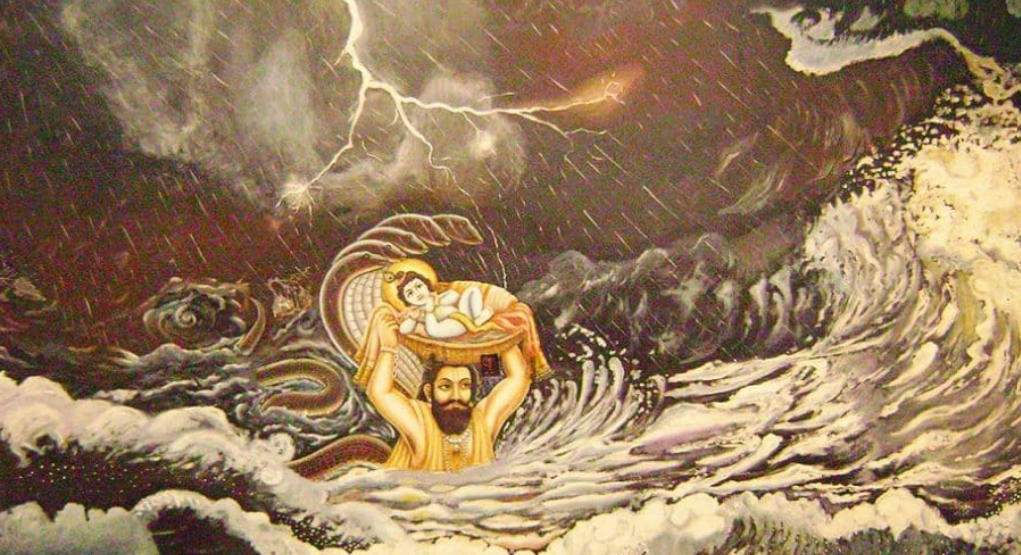
Kansa knew that his sister, Devaki's eight son will be his doom beforehand. In order to secure his life, he imprisoned Devaki and her husband Vasudeva in Mathura after there marriage. And killed any new born of Devaki the same night. Years passed and Kansa had killed seven children of Vasudev and Devaki. On the eighth night of Bhadra (as per Gregorian calendar - August/September), Devaki and Vasudev were expecting birth of their eight child. The couple was really scared as Kansa was eager to kill the eight child and overcome his doom. But that something divine happened. It was a stormy night and with the birth of Lord Krishna , Vasudev's chains opened , all the prisons opened, guards became unconscious. Vasudev decided to safeguard the eighth child and took him to his friend Nanda in Gokul. The journey where Vasudev crossed the flooding river Yamuna and reached Gokul safely. After reaching Gokul, he secretly exchanged Nanda and Yashoda's new born girl with Lord Krishna. And returned back to Mathura. After 12 years, Lord Krishna killed his maternal uncle Kansa in Mathura. Most of us are aware of this lore from our childhood. It is source of great motivation and inspiration. The journey of a helpless father taking leap of faith and crossing all barriers to safeguard his son. It is a Road less travelled.

But what made Devaki and Vasudev sacrifice their whole life for a child? How was Vasudev able to cross the mighty Yamuna? Was there any benefit of delaying one's freedom for Lord Krishna? Famous author M Scott Peck talks about problems and pain in his famous book The Road Less Travelled  that 

" Life is difficult. This is a great truth, one of the greatest truths. It is a great truth because once we truly see this truth, we transcend it. Once we truly know that life is difficult – once we truly understand and accept it – then life is no longer difficult. Because once it is accepted, the fact that life is difficult no longer matters" 

Problems are part and parcel of everyone's life. It is the problems that defines the direction and magnitude of our lives. The pain one bears to solve a problem is never easy, the journey of solving a problem be it professional or personal will always be tough and tiring. But people who overcome the pain and delay instant gratification of shortcuts are the one's who succeed . Vasudev and Devaki had waited for years in the prison of Mathura. Even when their chains were broken at the birth of Lord Krishna they did not run away from the prison. But took the pain to transfer lord Krishna from Mathura to Gokul. The problem they were trying to solve was never their own freedom, it was freedom of the society from the atrocities of Kansa. They never sought instant gratification but took pain of twelve more years in the prison for a better future of the society.

We need to start seeing our problems as a opportunity to better oneself. The path of solving a problem will never be easy, it will be full of anxiety, frustration, demotivation and self doubt. But  if we discipline ourselves and remain consistent in our approach, anyone can be successful in there respective lives. 


Reference - 


Thursday, 11 August 2022

Self Awareness - In Search of Shambhu

The holy month of Shrawan or Savan (as per Vedic calendar), which is filled with the divine energy and bliss of Lord Shiva  is about to end.  Shiva also known as Shambu or Swayambhu, which means self sustained /created / or independent. As per Hindu mythology, it is believed that Lord Shiva emerged from a pillar of fire which has no source or fuel, hence Swayambhu (Swayam - self, bhu - source). Shambu has been a source of inspiration and worship for ages. But what is it that makes Shiva, Shambu, let's find out.  


As per the Shiva Purana, once upon a time Lord Brahma and Lord Vishnu were having argument on being the Supreme lord of the universe. Lord Brahma cited being the creator of the universe which makes him superior to anyone else, while Lord Vishnu being the protector of the universe disagreed with Lord Brahma. Suddenly, an infinite pillar of fire emerged in front of them. In order to satisfy one's ego, both Lord Brahma and Lord Vishnu decided to compete. The person who will reach to the end of the fire pillar will be the supreme of all Gods is what they decided for. 

Lord Vishnu transformed into a boar and started moving downwards, while Lord Brahma transformed into a swan and flew upwards. Eons passed and no one was able to find the end of the fire pillar. Finally, lord Vishnu decided to return to the center of the pillar i.e. origin point of their journey. While traversing to the top, Lord Brahma found a Ketaki flower which fell down from the top of the pillar by a gust of wind. Lord Brahma convinced the Ketaki flower to say as desired by him , when they meet lord Vishnu. After reaching the origin point, Ketaki flower said that Lord Brahma met him at the top of the fire pillar, which makes him win the competition. 

Immediately, the fire pillar burst with anger and transformed into Lord Shiva. Lord Shiva called Ketaki flower a liar as Lord Brahma had never made it to the top of the fire pillar and denounced it from being used in any of the holy rituals. Lord Shiva cursed Lord Brahma by cutting his fifth head which spoke the lie and denounce him from being worshipped in any temples. From that day, lord Brahma has four heads and no temples. 

This story leaves us with few important questions - who is supreme? what makes one supreme? is self awareness important or show off? and most importantly - what makes a person Swayambhu?

Being supreme be in the modern corporate world or in the Vedic times is never about being more powerful. But it is about knowing one's power and using it when required. The ladders of hierarchy do  infuse us with power, but it is the use of the power that makes a person - a leader. Lord Shiva has always been the destroyer in the Hindu trinity. A person who can destroy anything is powerful, but destruction also is the first step of creation. It is a cycle. The above story is not about the destroyer or protector being more powerful. It is about knowing one's power and using it when required makes on Mahadev - the god of the Gods. 

One can be as perfect as Lord Vishnu or as witty as Lord Brahma, but the one who knows his/her form (self aware) in any form/formless is what makes one Shambu. Bestselling author Tasha Eurich talks about self awareness in a HBR article - What Self Awareness Really Is in two dimensions i.e. internal and external. Internal self awareness is how we see ourselves, our own values, passion, feelings, thoughts while external is all how about how others view us. Though both are independent, but leaders be it Lord Shiva in the above story or our modern era leaders i.e. Ratan Tata, M.S Dhoni, Narendra Modi and many more are good at one thing i.e. balancing both internal and external self awareness and being Shambhu.


References - 


Wednesday, 20 July 2022

Adiguru: The first teacher

 गुरुर ब्रह्मा गुरुर विष्णु गुरुर देवो महेश्वरः

गुरुः साक्षात्परब्रह्मा तस्मै श्री गुरुवे नमः

5th September, the day one of the greatest scholars of the 20th century, 2nd President of India Sarvapalli Radhakrishnan was born. The day we know and celebrate as Teacher’s Day. Being a teacher’s son, I have seen the pain and toil a teacher does to liberate society from the trenches of ignorance and darkness. A society without an empathetic teacher is a body without a soul. But who lightened the candle of education and knowledge first. Who is the first teacher? What is the origin of all the teachers of society? Who is Adiguru and Why?

Adiguru — the first teacher or the Supreme Master, the person who started the teacher disciple lineage. As per Hindu mythology, Lord Shiva is the Adiguru. The origin of Yoga, Dance, Art, War, Ayurveda, and many other areas has been Lord Shiva. Lord Shiva has enlightened the world with his wisdom while walking through different phases of his life. Let’s pick some of those pearls from Lord Shiva’s journey.

Lord Shiva — the teaching teacher

Parashurama, the sixth incarnation of Lord Vishu, the guru of Bhisma, Drona, and Karna was himself a disciple of Lord Shiva. Lord Shiva crystallized the martial arts skills of Parshurama and made him a furious warrior. The same martial art form has traveled across generations and is today practiced as Kalaripayattu in Modern Kerela.

Lord Shiva as a teacher ignited the candle of wisdom via Parsuram and it’s still alive with us. It is a trait of a great teacher to build skills of knowledge propagation and empowerment across his/ her students. The skill that keeps the wheel of wisdom moving across generations. Today our education policy needs to boost teachers who not only are learned but also great propagators of knowledge like Parsurama.

Lord Shiva — the teaching husband -

Lord Shiva meditated for thousands of years and mastered the art of Yoga. In order to propagate the Yogic art to the world, Lord Shiva bestowed the knowledge of his thousand years of meditation to Parvati. He taught the 84 Asanas of yoga to Parvati. The story of Lord Shiva imparting Yogic wisdom to Parvati is a story of balance. Balance in terms of body, mind, and soul. Because it was Lord Shiva’s love for Sati that made him Yogi, but it was his love for Parvati that made him Aadiyogi.

A good teacher always looks for balance in terms of the mind of his/her students, knowledge, power, or money. S/he always tries to nurture a balanced society which becomes an epitome of wisdom and knowledge.

Lord Shiva — the teaching father —

As per Skanda Purana, Lord Shiva sent his eldest son Kartikeya to Lord Brahma for education. Kartikeya went to Lord Brahma and asked a simple question.

Kartikeya — Please tell me the meaning of Om?

Brahma — First learn the alphabets then we can come to that question.

Kartikeya — No, I want the highest wisdom first

As Lord Brahma himself was not aware of the meaning of Om, Kartikeya returned to Kailasa and asked the same question to Lord Shiva. Lord Shiva himself was unaware of the answer. Kartikeya was ready to tell the answer but on one condition i.e. elevating Kartikeya to the pedestal of a teacher or Guru.

Lord Shiva agreed and live Kartikeya on his shoulders. Kartikeya then deciphered the meaning of Om in Lord Shiva’s ears. On hearing this Parvati joyously coined a new name Swaminatha (Natha — Teacher, Swami — Husband) for Kartikeya.

This story brings into picture one of the most important traits every teacher must follow. The path of being a seeker of knowledge from anyone and everyone. This is how the cycle of knowledge keeps on moving and reaching new horizons.

Hope this Teacher’s Day enlightens the candle of eternal wisdom across the minds of every student.

Vasuki -The Serpent king


Naag Panchmi, the auspicious fifth day of Shukla Paksha in the month of Sawan in India. A day when devotees worship snakes and seek their blessings for the family. Vasuki the serpent king that coils around the neck of Lord Shiva is worshipped on Naga Panchami. Vasuki, the son of Kashyap and Kadru is the most powerful snake and an ardent devotee of Lord Shiva. Without Lord Shiva, Vasuki is lifeless but a destructive and powerful cobra.

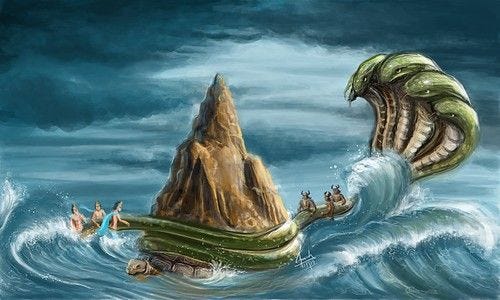
As per Vishnu Purana, during the time of Samudra Manthan (churning of the ocean), a holy exercise performed by Devas and Asuras together to bring back prosperity in the world, Vasuki played a pivotal role. With Mandar mountain as the churning rod and Vasuki as the churning rope, Devas and Asuras churned the ocean together to attain prosperity, strength, and vitality back. Varied ornaments, treasures, scriptures, Goddess, and Supernatural animals were the outcome of the Samudra Manthan. But the most revered ones were Amrita (Elixir of immortality) and Halahala (Deadly poison).

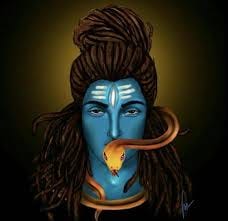
Lord Shiva, the Neelkanth drank the deadly poison together with Vasuki and other snakes in the ocean and saved the world from doom. Impressed by his selfless devotion, Lord Shiva decided to wear Vasuki around his neck. The serpent king beautifies Lord Shiva with his presence. It also symbolizes the awakened Kundalini power of the Muladhara chakra.

Apart from this, Lord Shiva has a powerful bow — Pinaaka. The string of this bow is none other than Vasuki. Vasuki helped Lord Shiva in destroying the Tripura of Tarkasura sons.

Vasuki is a multitalented disciple of Lord Shiva who symbolizes the balance of power, knowledge, and spirituality. Vasuki took the Road less traveled and imbibed a plethora of virtues from Lord Shiva himself. Following three virtues of Vasuki can be emulated by anyone during any phase of life

Self Discipline —

“Without discipline, we can solve nothing. With only some discipline we can solve only some problems. With total discipline, we can solve all problems” — M Scott Peck

Vasuki or the snake represents the intensity of kundalini lying lethargically in the Muladhara chakra of every individual. With self-discipline and meditation, anyone can plummet the kundalini or Vasuki to the highest levels. Lord Shiva with Vasuki on his neck symbolizes the attainment of enlightenment of the Muladhara chakra.

Open for change —

Change is something that happens every time and everywhere. Change is life. Embracing change in any phase of life is a sign of one’s adaptability and versatility. Every individual can learn this trait from the Serpent King Vasuki who served the role of a churning rod during Samudra Manthan or bowstring for Lord Shiva. He openly accepted the change and adapted the same for delivery of success. Life is all about being open to the changes that come every day.

Delayed Gratification —

Delayed gratification is one of the most effective personal traits and most difficult to acquire. It improves self-control and ultimately helps in attaining long term goals. Vasuki enjoyed Halahala with Lord Shiva and attained the esteemed company of Lord Shiva.

We can attain and enlighten our internal Vasuki by practicing these virtues and accompany Lord Shiva.

Dancing on Ignorance: Nataraja Way


Lord Shiva has many guises but one of the most prominent and known figures to recollect is — Lord Nataraja — the god of Dance. Nataraja brings in memories of brass or stone statues that we would have come across in temples, books, or any other medium. Nataraja is the first dancing Superstar who has been the inspiration for countless dance moves and songs. But what’s the need for Lord Shiva to become Nataraja. What’s that small creature on which Nataraja stands on. What’s the significance of Lord Nataraja in our lives. Let’s try to find out.

As per Skanda Purana, the sages of Darukawana were divine yogis. But they gained vanity of being the elite living beings. They performed rituals and started thinking of themselves as Gods. The gave up the path of karma and got addled to yagyas and rituals only. To lighten up their path Lord Shiva along with Lord Vishnu, disguised themselves as Bhikshatana — a young attractive beggar and Mohini — a serene beauty respectively and reached Darukawana. Mohini spellbound all the sages and they started following her. On the other hand, Bhikshatana mesmerized the sage’s wives. To curb this lusty behavior of their wives the agitated sages directed a serpent, a tiger, and a dwarf demon (Apasmara) towards Bhikshatana.

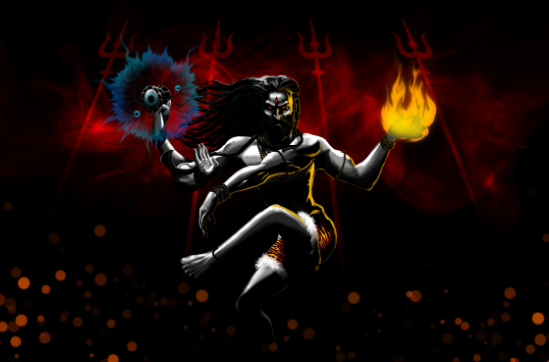
Apasmara, the demon of ignorance, a demon who can’t be killed but only subdued, a demon whose presence balances knowledge and ignorance in this world. Lord Shiva as Bhikshatana subdued the tiger and serpent by wearing them. But Apasmara was a powerful demon who can’t be killed. Lord Shiva emerged as Nataraja to subdue Apasmara. Nataraj commenced Ananda Tandava and subdued Apasmara by standing on him in Bhujangatrasita Karana pose. It saved the world from ignorance and chaos. Folklores tell that whenever Apasmara raises his hood, Lord Shiva reincarnates as Nataraja and subdues the demon.

Nataraja’s Panchakritya or five key acts give us a pathway of how we can subdue the demon Apasmara i.e. ignorance, self-doubt, unconsciousness, and unawareness from within and our environments even in the connected world today.

1. Damru or Drum —

Damru or the hourglass-shaped drum in the rear left arm of Nataraj signifies Srijan or creation. It tells us how positive vibrations can recede any demon aside. Positive vibrations signify traits like smile, gratitude, generosity, and kindness.

2. Fire -

The raised rear right hand with fire signifies Samhara or destruction. It tells how burning transforms an ore of gold to a beautiful jewel we also can burn or destroy our negativity and attain our true potential. Negativity in terms of self-doubt, jealousy, corrupt thoughts. A fire of positivity makes one attain the inner self.

3. Open palm -

The open palm of forehand signifies Stithi or assurance. It gives us a reassurance that there is nothing to fear the cosmic overhaul or change. Life is full of changes and one needs to be reassured and grow with those changes.

4. Hidden left palm -

The hidden lower-left palm signifies Tirobhava or concealment. It reveals that Nataraj is the creator and destroyer of Maya or illusion, the veil of ignorance. Maya represents the perceptions created by one’s beliefs, senses, and upbringing. It is only by shutting the illusions of this external world through meditation that the real truth is found.

5. Apasmara -

The demon of ignorance, Apasmara on which Nataraja stands is of prime importance. It signifies that ignorance can’t be eradicated from the world but can be subdued by the light of knowledge. It all about finding the spiritual and emotional self by following the path of self-awareness and mindfulness.

Nataraja symbolizes balance. A way to channelize all energies to subdue all the ill traits. Everyone can attain inner Nataraja by focus, meditation, knowledge, discipline, and self-awareness. Else the demon Apasmara will create an illusion of self-doubt and uncertainty in our lives.

COVID 19 — The Modern Ravana


With ten heads, twenty arms, a flying chariot, and a palace of gold, Ravana has been one of the most flamboyant villains of the Hindu mythology. From our childhood, most of us emulate Lord Rama. But we seldom pay notice to what Ravana was. Ravana the grandson of the great sage Pulatsya, one of the seven sons of the creator Lord Brahma. Rudra Strota, scripture written in praise of Lord Shiva was scripted by the same evil Ravana. Besides, Ravana, a great musician first made the Rudra Veena from one of his heads and hands.
These things show a somewhat opposite image of Ravana that we mostly know about. But the biggest thing is if Ravana was such a talented person then what for we worship lord, Rama.

Rama, a simple, ascetic man devoid of all the pomposity yet worshiped till date. The simple difference between Rama and Ravana were deeds, principles, and attitudes. Rama found positivity under all circumstances, even Van vasa. On the contrary, Ravana was dissatisfied in his golden castle.

COVID 19 is like the modern multi-faceted Ravana. A demon that has transformed the way we work, eat, travel, and even sleep. It has forced the global economy to an unforeseen recession and lots of negativity. Stress and fear are some of the most common outcomes of this at both personal and professional levels. But why to think only of Ravana and not Rama during these tough times.

“Tough times never last but tough people do — Robert H Schuller”

This is the time when we nurture and grow a Rama inside ourselves. Rama, a symbol of positivity, hope, balance, and empathy. Because if we attain Rama during such tough times no other problem can stand in front of us.

So always stay hopeful and positive.

Upskilling : Journey from Sati to Parvati

Learning is a continuous process and Covid 19 has acted as a catalyst for humanity in terms of learning. Pre Covid times were more of a routine 9–7 job , weekend parties , annual foreign vacations and so on. But Covid has given us time to look inside. A time to connect with our real selves and upgrade our versions. Upskilling has become the new buzz word of the town.The likes of Coursera , Byju’s , Udemy are flooded with plethora of courses on all life aspects. As a learner it becomes very important to choose an appropriate learning module. The purpose of this article is to bring in some clarity in one’s mind before we start to enter the rat race of upskilling.

Mythology is full of such instances where a person found the panacea of knowledge by upgrading her version. The transition from Sati to Parvati can be looked through the prism of upskilling and finding the correct path to identify relevant skills one wants to learn

Hindu mythology lights up the path for upskilling -

Sati is the avatar of Shakti who is destined to pair up with Lord Shiva. But there is one condition in place, Sati has to upgrade her mental and spiritual being at par with Shiva i.e. Upskilling. Sati fails to attain the skills and finally dies by self immolation. Parvati is the reincarnation of Sati with same destiny to be the better half of Shiva. Parvati is a composed and complete version of Sati who mirrors all her previous flaws and learns from all the odds. And finally she becomes Shakti of Lord Shiva. So how did Parvati upskill her human embodiment to a divine god. Here are the 3 pillars she followed for upgrading herself -

  1. Know Thyself —

Knowing thyself simply means how much of self introspection has been applied to know our strengths , weakness. If we are aware of the same its a cakewalk to decide which new skill to pick up. For example, if I am good at talking to people , PR or Communication would be a relevant skill for me

2. Begin with the end in your mind —

It is all about imagining what you want to achieve. Do you want to join a course just for the sake of spending time or make it relevant to your professional life. The best way to procreate a goal beforehand will help one define the road map to achieve skills. For example if one wishes to be a maverick Marketer, Programming will never be a logical skill to acquire and vice versa. So to achieve the maximum deep dive inside your and understand if the new skill is needed for the sake of a promotion , project or just learning

3. Key Result Areas —

End point of the journey is the destination but key result areas are the compass. They help guide you and measure your progress. Keeping relevant milestones while doing online courses i.e. frequency, closure etc can act as a guiding tool for effective and continuous learning.

So let’s embrace the journey of constant learning with some words of wisdom from our Hindu mythology and make these tough times a phase of upgrading our inner selves.

Wednesday, 8 January 2014

What a boss wants ????

                                       What a boss wants ????


We spend most part of our day to day lives either thinking of our partners or our bosses.Conflict of interests between them and us leads to a number of problems.Most of the time I find people entangled in "bossphobia". But we rarely think, What our boss really wants? In order to thrive a real work-life balance we need to stop a minute and think about it. Today I will try to put some light on this treacherous creature "Boss", not the blockbuster movie but the leech who sucks our happiness. It might help you in understanding this daily quandary.

Let me tell you an Indian mythological story.

One day Narad asks lord Vishnu, "Why is the image of Garuda placed before you in temples and not me? Am I not your greatest devotee?"

Suddenly a crash sound comes from outside. As Garuda was not present,Vishnu asks Narad to go out and investigate.

Narad(after returning) : A milkmaid fell and broke her pot.
Vishnu: What was her name?
Narad runs out again to ask her name.

Narad: Her name is Geeta.
Vishnu: Where was she going?
Narad again runs out to ask her and comes back.

Narad: She was going to the market.
Vishnu: Why she fell?
Narad(irritated): Why did you not ask this the last time I went outside?
And again he runs outside.

Narad: She stepped on a thorn and fell.
Vishnu: Are all her pots broken?
Narad: I don't know.
Vishnu: Then find out as I want to buy some milk.
Narad gets angry but follows his master and runs again.

Narad: She broke one of her two pots.
Vishnu: How much I need to pay for the left pot of milk?
Narad: I again forgot.

Just then Garuda flies in. He has no idea of what has transpired between Vishnu and Narad. Vishnu tells Garuda, " I heard a crashing sound outside.Can you find out what happened? As Garuda leaves, Vishnu says," Let us see how well he does."

Garuda(after returning): It's a milkmaid named Geeta. She was on her way to market. Suddenly, she stepped on a thorn and fell. She broke one of her two pots. Now she wonders how to make enough money to pay for the broken pot.She wishes to sell the remaining milk at double the initial price i.e. 8 gold coins, in order to  break even.I suggested to sell the milk to you as you are married to Lakshmi, the goddess of wealth.

Now Vishnu turns his gaze to Narad. Narad realizes his mistake and understands why Garuda's statue, and not his was always placed before the image of Vishnu.


Despite being given the freedom to take decisions, Narad chooses to be a follower, as he is afraid of the consequences. In contrast, Garuda anticipates the needs of Vishnu. So, the next time you find yourself stuck between the expectations of yours and your boss' , think for a minute. Are you Narad or Garuda.*


(* conditions apply. Few bosses are not equivalent to Vishnu )


Monday, 6 January 2014

It's all about strategic intent

                                 It's all about strategic intent


With ten heads, twenty arms, a flying chariot and a palace of gold, Ravan has been one of the most flamboyant villains of the Hindu mythology. Then what's the reason behind burning his effigy every autumn. And how can we take a management lesson from the same. Let's take a deep dive into Ravan's life to be a better manager in the 21st century.


From our childhood most of us emulate Lord Rama. But we seldom pay notice to what Ravan was. Ravan the grandson of the great sage Pulatsya, one of the seven sons of the creator Lord Brahma.
Rudra Strota, scripture written in praise of Lord Shiva was composed by the same evil Ravan. In addition, Ravan, a great musician first made the Rudra Veena from one of his heads and hands.
These things show a somewhat opposite image of Ravan what we mostly know about. But the biggest thing is if Ravan was such a talented person then what for we worship lord Ram.

Ram, a simple, ascetic man devoid of all the pomposity yet worshiped till date. The simple reason behind all this is Ram's strategic intent. In other words how strategically he wove the fabric of his life with his ethics,truth,empathy,team spirit and a clear path of life. Because in the long term it is the strength of this fabric that matters.

 In modern times, managers may get dazzled by the Blackberries,the Porsches and the riches in the short run but it's what creates a Ravan within us. And in order to be revered as a modern Ram in managing arena one needs to engineer simplicity with a clear vision to succeed.That's the strategy Michael Porter also talks about. So develop a positive strategic intent in life and have a real break.

Sunday, 5 January 2014

It's time for a break


A new storm of the Aam Aadmi has swept the whole nation. The old political forts (BJP and Congress) have been devastated by the storm. This new wave of politics of Arvind Kejriwal holds some deeper insights for the aam aadmi of the country. And as a citizen of an independent country we need to understand the intricacies of Kejriwal's regime.

The rise of Kejriwal provides a hope for the common man to do something uncommon. But it's not his rhetoric that we should be aping. Because most of our political leaders are known to polarize masses with their rhetoric. Kejriwal infuses a new gene of sacrifice, honesty. truthfulness, perseverance, rationality, empathy and above all simplicity. It's not that I am a follower of any political party.I am just the follower of reason and logic.And I am analyzing where we failed and how this political scion can be a gene changer for our society.

From ancient times, our society has been blessed by some great personalities. Starting from the Treta yuga, Lord Ram or the Dwarpar yuga, Lord Krishna. Moving to recent times, leaders like Gandhiji, Swami Vivekananda and many more. But the ugly fate has always demolised the hope engendered by these people.The reason is lack of will of the masses. Adding to the pain is our naive society which gets polarized very easily. That's the reason why we stand on the same fork as  we were at the time of independence. But it's time to change.

The upsurge of the AAP provides the people the same opportunity to introspect as well as retrospect the evils holding our society to grow. The Kejriwal brigade has created a path for the common man to follow for a better tomorrow. But it is in our hands to take a break a think how to be a true Aam Aadmi.    

Epitome of intelligence - Lord Hanuman

As per Hindu mythology,  Lord Hanuman is the most popular, loved and worshipped god. He is the epitome of mental and physical strength.  बल,...